Case Study: Air Intake System Degradation Detected by DataMind AI in Komatsu 930E
31 de marzo de 2026
Air intake and exhaust system degradation in mining haul trucks leads to incomplete combustion, excessive soot formation, and accelerated engine wear. When multiple intake and exhaust parameters deteriorate simultaneously, the compounding effects can rapidly escalate toward engine failure. DataMind AI continuously monitors oil analysis soot and combustion indicators, intake manifold temperatures, turbocharger boost pressures, and air filter differential pressures in critical engine systems, enabling early detection of airflow degradation before it causes secondary damage.
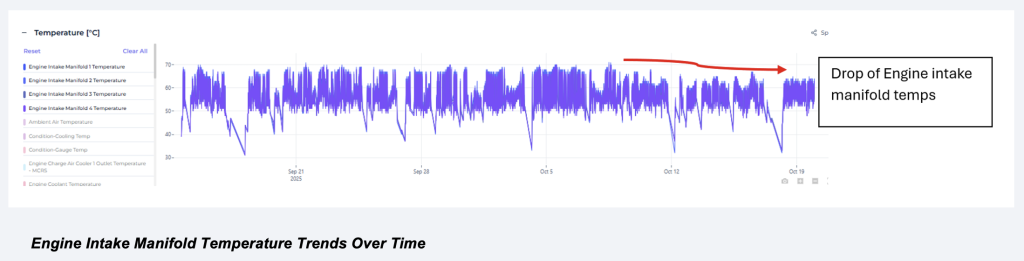
In this case, DataMind AI identified converging anomalies across multiple engine parameters on a Komatsu 930E haul truck. Oil analysis on October 14 revealed high soot levels at 29 ABS, confirming excessive combustion residue accumulating in the engine oil. Simultaneously, telemetry trend data showed intake manifold temperatures across cylinders 1 through 4 had dropped, and boost pressures from both turbochargers decreased, indicating reduced airflow through the intake system. These concurrent changes across oil quality, thermal, and pressure data sources pointed to a systemic airflow problem rather than an isolated sensor fault.
By cross-referencing the elevated soot in oil analysis with declining intake manifold temperatures and reduced turbocharger boost pressures, DataMind AI diagnosed restricted airflow or pressure leakage in the intake and exhaust systems. The probable causes identified included clogged air filters, damaged intake or exhaust bellows, or loose clamps causing air leaks that reduced charging efficiency and led to incomplete combustion with increased soot formation.
Based on this multi-source diagnosis, the site team inspected and replaced air filters, checked intake and exhaust lines for leaks, and verified turbocharger bellows and connections. These targeted actions restored proper airflow and combustion efficiency, preventing escalation to turbocharger damage, cylinder scoring, and premature oil degradation, avoiding an estimated 2 days of unplanned downtime and saving approximately $65,000.
Results at a Glance
$65,000
saved2 Days of unplanned downtime prevented
Conclusion
High soot with declining boost and intake temperatures
Air intake restriction causing incomplete combustion
Prevented turbocharger damage and engine oil degradation