Case Study: Differential Lube Pressure Deficiency Detected in CAT 793D
30 de marzo de 2026
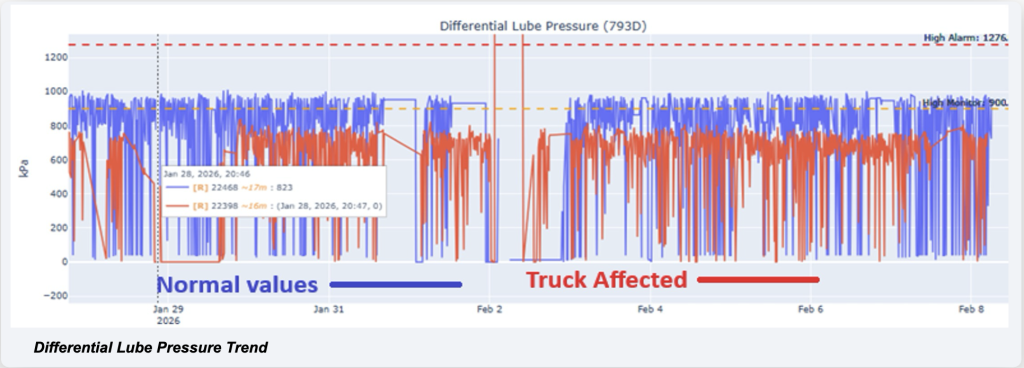
DataMind AI continuously monitors differential lubrication pressure, OEM alarm events, filter condition indicators, and rear axle system performance on a CAT 793D haul truck. The system detected two low differential lubrication pressure alarms, combined with numerous differential filter switch alarms indicating clogging.
Pressure telemetry showed an average differential lube pressure of 780 kPa (112 psi), significantly below the recommended 960 kPa (140 psi). OEM alarms confirmed both low pressure events and repeated filter clogging. The rear axle lube system, driven by a hydraulic motor from the steering priority valve, delivers oil to the differential bearing and final drives. Conventional periodic inspections would not capture the transient low-pressure events between service intervals.
Correlating the pressure deficit with filter clogging alarms and system flow analysis, the AI identified that partially obstructed flow in the lubrication circuit was reducing pressure below the minimum required for adequate bearing and final drive lubrication. The steering priority valve output pressure, internal tube condition to final drives, and sensor accuracy were all flagged as potential contributing factors requiring verification.
Maintenance inspected the pressure sensor and installed a manometer for comparison, verified priority valve pressure at 2650 psi, inspected internal tubes to the final drives, and performed a manual lubrication test. Early detection prevented accelerated bearing wear and potential differential failure, saving an estimated $55,000 and 2 days of downtime.
Results at a Glance
$55,000
saved2 Days of unplanned downtime prevented
Conclusion
Differential lube pressure averaging 780 kPa, well below the 960 kPa recommendation
Pressure telemetry deficit correlated with OEM low-pressure and filter clogging alarms
Accelerated bearing wear leading to differential and final drive failure