Case Study: Wheel Motor Bearing Wear Detected by DataMind AI in Komatsu 930E
14 de abril de 2026
Wheel motor failures in ultra-class haul trucks are among the most costly and operationally disruptive events in mining. Undetected bearing degradation can lead to catastrophic seizure, requiring full motor replacement and extended downtime. DataMind AI continuously monitors oil analysis trends, temperature differentials, and loading telemetry in critical drivetrain components, enabling early detection of progressive wear before it escalates into failure.
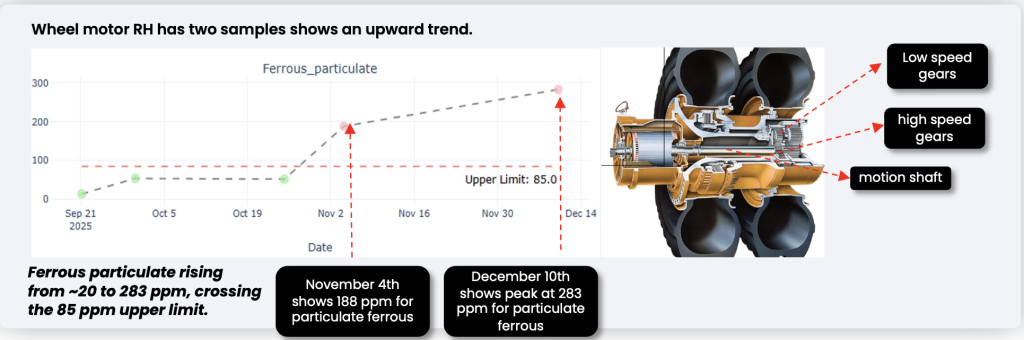
In this case, DataMind AI identified a progressive ferrous particulate wear trend in the wheel motors of a Komatsu 930E haul truck. The right-hand wheel motor oil analysis showed iron concentration rising from 188 ppm to 283 ppm across consecutive samples, confirming an accelerating wear pattern. The left-hand wheel motor recorded 167 ppm, with additional samples required to confirm a trend. AMT maintenance records indicated a PTU card mismatch that was corrected through reprogramming, and no prior maintenance actions addressed the wear condition directly.
By correlating oil analysis wear metal trends with PLM payload data and operating temperature comparisons between left and right wheel motors, DataMind AI diagnosed the root cause as progressive low-speed bearing pitting driven by elevated mechanical stress from overloading conditions. The 10-10-20 load policy compliance review confirmed excessive torque demand contributing to oil film breakdown and metal-to-metal contact.
Based on this early warning, the site team initiated targeted actions including magnetic plug debris morphology analysis, additional oil sampling, and scheduling wheel motor replacement. A work order was created to address the condition before catastrophic failure, preventing an estimated 5 days of unplanned downtime and saving approximately $120,000 in emergency repair costs.
Results at a Glance
$120,000
saved5 Days of unplanned downtime prevented
Conclusion
Progressive ferrous particulate increase in wheel motors
Low-speed bearing pitting from overload stress
Prevented catastrophic wheel motor seizure and downtime