Major haul truck failures rarely begin at the moment the truck stops. In many cases, the underlying condition has been developing for days or weeks – visible through changes in temperature, pressure, fault-code behaviour, operating response or fluid condition.
The challenge is not simply collecting more data. It is identifying which changes represent normal operating variation and which indicate a developing fault.
The objective is not simply earlier detection – it is converting emergency maintenance into planned maintenance while reducing secondary component damage and production loss.
Modern mining trucks generate substantial health and operational data through onboard control systems. Additional sources – including fluid analysis and tyre-monitoring systems – can add further context. The exact data available varies by OEM, truck model, architecture and site configuration. Understanding predictive maintenance for mining equipment starts with knowing which signals apply to your specific fleet.
This guide examines seven high-impact haul truck failure categories, the signals that may precede them, and how maintenance teams can turn those signals into planned action.
Key Insights
- Not all haul trucks share the same architecture. Mechanical-drive and diesel-electric trucks have different drivetrain failure modes and require different monitoring priorities.
- Much of the relevant condition data already exists in onboard control systems, oil analysis results and tyre-monitoring platforms. The challenge is integrating and interpreting it consistently.
- Transmission and drivetrain failures are among the most consequential on mechanical-drive trucks. Relevant temperature, pressure and fault-code data may be available through existing OEM systems.
- On diesel-electric trucks, traction motors, inverters and electrical drive cooling systems are high-priority monitoring targets that require different signals from those used on mechanical-drive fleets.
- Oil analysis and onboard telemetry are complementary sources. Combining them gives a more complete picture than either alone.
- Post-repair verification – confirming that a fault signature has actually resolved after maintenance – is one of the most underused steps in haul truck maintenance practice.
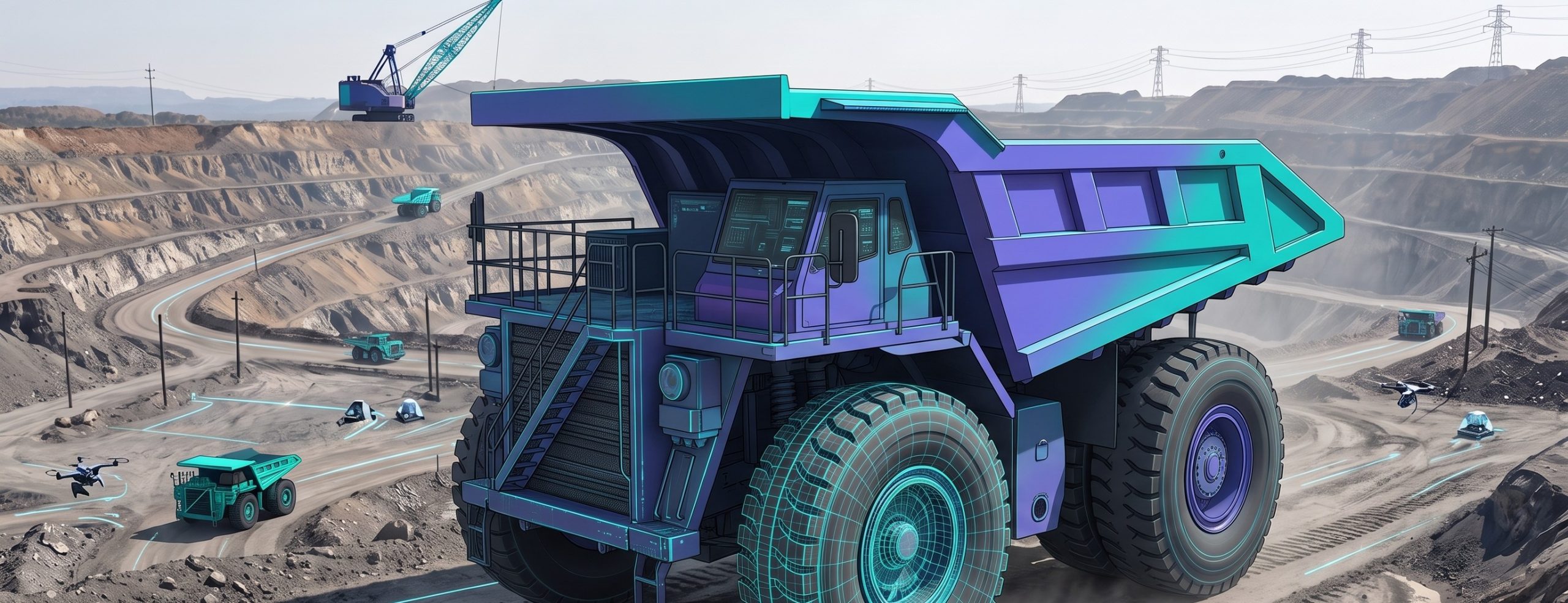
Two Architectures, Different Failure Priorities
Before mapping failure modes to signals, it is worth understanding that not all haul trucks work the same way.
Mechanical-drive trucks – such as the Caterpillar 793 and Komatsu HD1500 series – use a conventional powertrain: diesel engine, torque converter, transmission, driveshaft, differentials and final drives. This is the architecture most commonly described in maintenance literature.
Diesel-electric trucks – including Liebherr’s diesel-electric mining truck range and the Komatsu 930E – use a diesel engine to drive a generator, which powers electric traction motors at each drive wheel. There is no conventional transmission or final drive. The monitoring focus shifts to the generator, traction motors, inverters, power electronics and electrical drive cooling systems.
Understanding which architecture your fleet runs – or which mix you operate – is the starting point for any condition-monitoring programme.
Failure Modes on Mechanical-Drive Trucks
1. Transmission and Torque-Converter System
Transmission failure is one of the most consequential events on a mechanical-drive haul truck. A major intervention can involve significant component and repair costs before production losses are considered.
Available signals: transmission fluid temperature trends, pressure readings within the transmission circuit, gear selection and shift-quality data from the control system, and fault codes. Fluid temperature that trends above the unit’s established baseline under normal operating conditions is a common early indicator.
Where oil analysis is conducted, elevated wear-metal content in transmission samples – particularly iron and copper – can provide an additional early signal. Oil analysis results are collected periodically, not broadcast continuously, but integrating them with onboard telemetry adds meaningful depth.
Operational impact: An unplanned transmission removal typically takes a unit out of the haul cycle for an extended period, disrupts truck-shovel balance and converts a planned maintenance activity into an emergency intervention.
2. Final Drives and Differentials
Final drives can be under-prioritised in monitoring programmes relative to the transmission, despite having a similar cost profile when a major failure occurs.
Available signals: final drive oil temperature where monitored, and a comparison between left and right drive temperatures on the same truck, which can indicate asymmetric wear. Oil analysis on final drive lubricant – particularly metal particle counts – is one of the more sensitive early indicators available for this component.
Operational impact: A sudden final drive event may require recovery from the haul road and typically causes an extended production stoppage.
3. Engine and Cooling System
Cooling system failures are among the more frequent on-site breakdowns and also among the more avoidable, given the data trail that typically precedes them.
Available signals: coolant temperature trending above the unit’s baseline under normal load, engine oil pressure, engine load factor, fan engagement frequency and exhaust temperature where monitored. Changes in temperature behaviour during warm-up can reflect thermostat condition, but may also be influenced by ambient temperature, engine load and idle time. Treat these as diagnostic patterns to investigate rather than definitive indicators.
Operational impact: Progressive cooling failure can result in engine damage if not caught early – turning a relatively straightforward component replacement into a major engine intervention.
4. Hydraulic System
Hydraulic faults often first appear as subtle performance changes – slower hoist response, slightly reduced cycle speed – that can be attributed to operating style rather than system condition. The data provides a more objective picture.
Available signals: hydraulic oil temperature, filter differential pressure (which rises as contamination load increases), and changes in cycle time or command-versus-response behaviour where these are recorded. Precise flow measurement is not available on all configurations; pressure and cycle-behaviour signals provide the primary picture where it is not.
Fluid contamination is a significant contributor to hydraulic component wear and failure. An undetected hydraulic fault can result in extended downtime, particularly when contamination has spread through the circuit.
Operational impact: Hydraulic failure can affect hoist, steering and suspension systems. Depending on the failure point, it may strand a truck at the face or on the haul road.
5. Braking and Retarding System
Braking and retarding faults carry both operational and safety implications. Early detection matters for the truck and for the people working around it.
Available signals: retarder temperature under consistent grade and payload conditions compared to the unit’s own baseline, brake oil temperature, service brake application data and – on air-braked configurations – system pressure decay rate over time.
Operational impact: Retarder or brake degradation on a loaded haul truck creates a direct safety risk on descents. Monitoring these signals gives maintenance teams more lead time than many operations currently use.
Failure Modes on Diesel-Electric Trucks
On a diesel-electric haul truck, the mechanical transmission is replaced by an electrical drivetrain. This changes the failure profile significantly, and the monitoring approach needs to reflect that.
6. Generator, Traction Motors and Power Electronics
The primary drivetrain risks on a diesel-electric truck are in the electrical components. These require different signals from those used for mechanical drivetrain monitoring.
Available signals: generator output trends and temperature, traction motor temperature and current draw – including asymmetric loading across individual motors – inverter temperature, electrical cabinet cooling system performance, and fault codes from the drive system. Insulation resistance trends, where available, can indicate motor degradation at an early stage.
The exact data available varies by manufacturer, truck model and site data-access arrangements. Signals typically come from a combination of the truck’s onboard control system and, in some configurations, separate electrical diagnostic platforms.
Operational impact: An inverter or traction motor fault can disable part or all of the electrical drive system. Unplanned interventions on electrical drivetrains are typically complex, time-consuming and difficult to execute remotely.
7. Dynamic Retarding and Electrical Cooling
On diesel-electric trucks, braking energy is dissipated through resistor grids and the electrical system rather than a mechanical retarder. This creates a distinct set of monitoring priorities.
Available signals: resistor grid temperature under known grade and payload conditions, electrical drive cooling system performance, and fault codes related to the retarding circuit. Electrical cabinet and power electronics drive cooling is a high-priority monitoring area – cooling degradation accelerates component wear and can trigger thermal protection shutdowns.
Operational impact: Retarding system faults affect safe operation on loaded downhill hauls – the same safety concern as with mechanical retarder faults, through a different mechanism.
Tyre Damage and Heat-Related Failure (Both Architectures)
Tyre risks apply across all haul truck architectures and have some of the clearest leading indicators available in operational data.
TKPH – tonne-kilometres per hour – is a tyre workload measure based on load and average cycle speed. Each tyre has a rated TKPH capacity under defined conditions. When operating TKPH consistently exceeds that rating, heat accumulates faster than the tyre can dissipate it, increasing the risk of accelerated deterioration.
Tyre pressure monitoring is typically provided by a dedicated tyre-pressure monitoring system rather than the main OEM telematics platform, though some platforms integrate tyre data. Payload data from OEM systems provides a useful indicator of overloading events, which directly affect tyre stress and the rate of heat accumulation.
Operational impact: Tyre events range from manageable pressure loss to a high-energy structural failure that creates a significant safety and recovery situation. TKPH management is one of the most direct forms of tyre life optimisation available to fleet managers.
From Signal to Action
Combining data sources
The signals described above come from multiple sources: onboard OEM telematics, periodic oil analysis and tyre-monitoring systems. No single platform broadcasts all of them continuously. The most complete condition picture comes from combining these sources and reading them in context – against unit-specific baselines, not generic thresholds.
That integrated approach is what a systematic predictive maintenance programme for mining fleets is built around: consistent data access, unit-level baselines, and a maintenance workflow connected to the findings.
Threshold alerts and condition monitoring
Threshold alerts remain essential for safety and acute protection – low oil pressure, overheating, overspeed conditions. Condition-based monitoring adds an earlier layer by tracking trends across multiple parameters over time, compared to each unit’s own baseline rather than a generic limit.
A value that has not yet crossed a threshold but is trending consistently in the wrong direction – in combination with related signals on the same unit – may indicate a developing fault that threshold monitoring alone would not surface until much later.
Post-repair verification
One of the most underused steps in maintenance practice is confirming that a repair actually resolved the underlying fault condition. Building a programme around these failure modes means including verification as a standard step, not an optional one.
A closed work order confirms that a technician completed a task. It does not confirm that the fault signature has resolved. If the data pattern that indicated the developing fault persists after the maintenance action, the intervention did not fully address the underlying condition.
DataMind AI: DataMind AI reads across OEM telemetry and oil analysis results – and can integrate tyre-monitoring data where available – correlating data across multiple sources against each unit’s own baseline in its specific operating environment. When a fault signal develops, it surfaces with root cause context: which unit, which component, what is developing, and what urgency applies. After the maintenance action, DataMind AI continues monitoring to confirm the fault signature has resolved. If it has not, the system flags it.
Frequently Asked Questions
What is the difference between a mechanical-drive and a diesel-electric haul truck?
A mechanical-drive haul truck uses a diesel engine connected through a torque converter, transmission, driveshaft, differentials and final drives to power the wheels. A diesel-electric truck uses the engine to drive a generator, which then powers electric traction motors at each drive wheel – replacing the conventional mechanical drivetrain. This architectural difference significantly changes which failure modes are most relevant and which signals to monitor. Transmission and final drive failures apply to mechanical-drive trucks; generator, traction motor and inverter faults become the primary drivetrain risks on diesel-electric machines.
What are the most important failure modes to monitor on a mechanical-drive haul truck?
The highest-priority areas are typically the transmission and torque-converter system, final drives and differentials, the engine and cooling system, the hydraulic system and the braking and retarding system. The exact monitoring approach depends on what data is available from the truck’s OEM control system and what supplementary sources – such as oil analysis – are in use at the site.
What signals are available on diesel-electric trucks?
Available signals vary by manufacturer and configuration. Common sources include generator output and temperature, traction motor temperature and current draw, inverter and power electronics temperatures, electrical cabinet cooling performance and fault codes from the drive system. The specific data streams available depend on the OEM platform, truck model and the site’s data-access arrangements. As with mechanical-drive trucks, the exact coverage requires confirming for your specific fleet.
How does oil analysis fit into a haul truck monitoring programme?
Oil analysis measures wear-metal content, particle counts and fluid condition in transmission, final drive, hydraulic and engine oil samples. It provides information about what is happening inside components that temperature and pressure data may not reveal at an early stage. Oil analysis results are collected periodically and sit in a laboratory or service portal – they are not broadcast continuously by the truck. Combining periodic oil analysis with continuous onboard telemetry gives a more complete picture than either source alone.
What is TKPH and how does it affect tyre management?
TKPH – tonne-kilometres per hour – is a tyre workload measure based on load and average cycle speed. Tyre manufacturers publish rated TKPH values under defined conditions. When a truck’s operating TKPH consistently exceeds the tyre’s rating, heat accumulates at a rate the tyre cannot dissipate, increasing the risk of accelerated deterioration. Monitoring TKPH is one of the most direct ways to manage tyre life and reduce the risk of high-energy tyre events on the haul road.
What is the difference between a threshold alert and condition-based monitoring?
A threshold alert fires when a measurement crosses a defined limit. These remain essential for safety and acute protection. Condition-based monitoring adds an earlier layer by tracking trends across multiple parameters over time, compared against each unit’s own baseline rather than a generic limit. A value that has not yet reached a threshold but is trending consistently in the wrong direction – in combination with related signals – may indicate a developing fault that threshold monitoring would not flag until later.
Does predictive monitoring require new sensors to be installed?
Not always. For many monitored failure modes, particularly on modern trucks, useful data is already available through existing OEM control systems. Where gaps exist – components not covered at sufficient resolution, or older equipment with limited telematics – additional sensors can be added where they add genuine value. Oil analysis and tyre-monitoring data typically come from separate systems that integrate with the monitoring platform, rather than from new hardware installed directly on the truck.
What does post-repair verification mean in practice?
Post-repair verification means continuing to monitor the specific data pattern that indicated the developing fault after a maintenance action has been completed. If the pattern normalises, the repair was effective. If it persists or returns, the intervention did not fully resolve the underlying condition. A closed work order confirms that a task was completed. It does not confirm that the fault condition has resolved. This step is frequently skipped, which is why some faults repeat shortly after a repair.
See What Your Fleet’s Data Can Tell You
Your fleet’s condition picture comes from multiple sources: OEM telemetry, oil analysis results and – where available – tyre-monitoring data. DataMind AI integrates these across your fleet, reads them against each unit’s own baseline, and surfaces developing faults with root cause context – across both mechanical-drive and diesel-electric fleets.