Pull a wheel motor or a differential for scheduled service and it often turns out to have plenty of service life left – you’ve spent the downtime and parts budget on a component that wasn’t close to failing. Wait for the alert instead, and on a threshold-based system, that alert frequently arrives after most of the damage is already done. This is the real tension behind preventive vs. predictive maintenance in mining: neither approach, done the way most sites still run it, is actually catching problems early enough.
The answer isn’t choosing one strategy over the other. It’s understanding that most of what gets called “predictive maintenance” – including standard OEM telemetry alerts – is still reactive by the time it fires. True prevention means catching a developing fault weeks before any single threshold would fire, understanding why it’s happening, and acting before the part breaks.
This post breaks down what preventive and predictive maintenance actually cost your site, where each one still makes sense, and why the gap between “an alert fired” and “the damage is already done” is the distinction that should be driving your maintenance strategy in 2026.
Key Insights
- Preventive maintenance replaces parts on a fixed schedule regardless of condition – it prevents some failures but over-maintains healthy components.
- Most predictive maintenance tools, including standard OEM telemetry alerts, are threshold-based – by the time a threshold is crossed, a large part of the damage and deterioration has typically already occurred.
- True early detection requires AI sensor fusion – correlating multiple monitored systems together, not watching single values against fixed limits.
- DataMind AI connects to existing sensors and OEM telemetry from CAT, Komatsu, Hitachi, Liebherr, Sandvik, and other major OEMs – cybersecurity-safe, with additional sensors added only where needed to strengthen sensor fusion.
- Unplanned downtime on a haul truck can run well into six figures per day in lost production at a Tier 1 site – the exact figure varies significantly by site, commodity, and equipment class.
- Early detection alone isn’t enough – the real value is root cause analysis and a recommended remedy, so teams act before breakage instead of reacting after.
- DataMind AI closes the loop: after a mechanic completes the work order, the system re-checks and verifies the original fault is actually gone – not just that the maintenance log shows “done.”
What’s the Real Difference Between Preventive and Predictive Maintenance?
Preventive Maintenance: Scheduled, Time-Based, Predictable Cost
Preventive maintenance runs on the calendar or the hour meter, not on the actual condition of the part. A wheel motor gets rebuilt at 12,000 hours whether it needs it or not. It’s predictable to budget for, and it does prevent some failures – but it also means healthy components come out of service on a schedule that has nothing to do with how they’re actually wearing.
Predictive Maintenance: Not All “Predictive” Is Created Equal
Predictive maintenance is supposed to fix that by using condition data instead of a calendar. In practice, most predictive tools on a mine site – including the OEM’s own telemetry dashboard – are still threshold-based. A temperature, vibration, or pressure reading crosses a fixed limit, and an alert fires. That’s a step up from a blind schedule. It is not the same as catching a fault early. For a full breakdown of how predictive maintenance for mining equipment actually works, see our complete guide.
Why OEM Threshold Alerts Aren’t True Prevention
How Threshold-Based Alerts Work – and Why They Fire Late
A threshold alert exists to catch a value once it’s already abnormal. By definition, it can’t fire until the number crosses the line – which means the component has already been operating in a degraded state long enough to reach it. For a haul truck’s final drive or a conveyor gearbox, that degraded window can span days to weeks before the alert ever appears on a dashboard.
The Gap Between “Alert” and “Damage Already Done”
By the time a threshold-based alert triggers, a large part of the damage and deterioration has typically already occurred. The alert isn’t wrong – it’s just late by design. Sites relying on OEM thresholds alone are often reacting to failures that started developing weeks earlier, which lines up with the most common haul truck failure modes mining fleets see even when telemetry is already in place.
The True Cost of Each Approach
What Preventive Maintenance Actually Costs a Mine Site
Fixed-schedule maintenance has a hidden cost beyond parts and labor: components pulled while they still have usable life left. Across a mobile fleet, that adds up in unnecessary teardown hours, premature part replacement, and technician time spent on components that weren’t close to failing.
What Unplanned Downtime Costs When Threshold Alerts Come Too Late
Unplanned downtime on a haul truck commonly runs well into six figures per day in lost production at a Tier 1 site. The exact number varies significantly by site, commodity price, and equipment class – but it consistently dwarfs the cost of the maintenance work order that could have prevented it. A threshold alert that fires after the damage is done doesn’t avoid that cost; it just confirms the clock has already started.
When Preventive Maintenance Still Wins
Low-Cost, High-Failure-Rate Components
Filters, belts, and other low-cost wear items with predictable failure curves are usually cheaper to replace on a fixed schedule than to monitor. The cost of over-replacing them is small, and the cost of instrumenting them for condition monitoring often isn’t worth it.
Assets Without Usable Condition Data
If a component genuinely isn’t generating usable condition data – no OEM telemetry, no practical way to monitor it – a fixed schedule is still the safer default until that changes.
How AI Sensor Fusion Catches Faults Weeks Earlier
Reading OEM Telemetry as a Starting Point, Not the Answer
OEM telemetry is a legitimate data source – engine parameters, hydraulic pressures, load cycles. The mistake is treating it as the finish line. Used on its own, against fixed thresholds, it inherits the same lag every threshold-based system has.
Correlating Sensor Arrays Instead of Watching Single Thresholds
AI sensor fusion works differently. Instead of watching one value against one limit, it correlates signals across multiple monitored systems at once – vibration, temperature, load, cycle patterns – to recognize a developing fault pattern long before any individual reading would cross a threshold. That’s the difference between noticing one gauge move and recognizing that several systems are drifting together in a way that only happens when a specific failure is underway.
From Detection to Root Cause to Recommended Action
Catching the pattern early is only useful if the team knows what to do with it. Real prevention means the system also identifies the likely root cause and recommends the specific action to take – not just “something looks off with unit 47,” but what’s failing, why, and what to do about it before it breaks.
A Practical Framework: Deciding Asset-by-Asset
Criticality vs. Predictability Matrix
Rank each asset class on two axes: how costly is failure (criticality) and how well does its condition data predict that failure (predictability). High-criticality, high-predictability components – final drives, engines, major driveline parts – are where early sensor-fusion detection pays for itself fastest. Low-criticality, low-predictability items stay on a schedule. This kind of asset-by-asset thinking is central to any systematic predictive maintenance for mining equipment programme.
Why Most Sites Need a Hybrid Strategy, Not a Single Approach
Almost no fleet is purely preventive or purely predictive in practice, and it shouldn’t be. The goal is matching the strategy to the asset – fixed schedules for the wear items, true early detection for the components where an unplanned failure actually threatens production.
How DataMind AI Delivers Real Prevention
Built on Your Existing Sensors and OEM Telemetry – CAT, Komatsu, Hitachi, Liebherr, Sandvik, and More
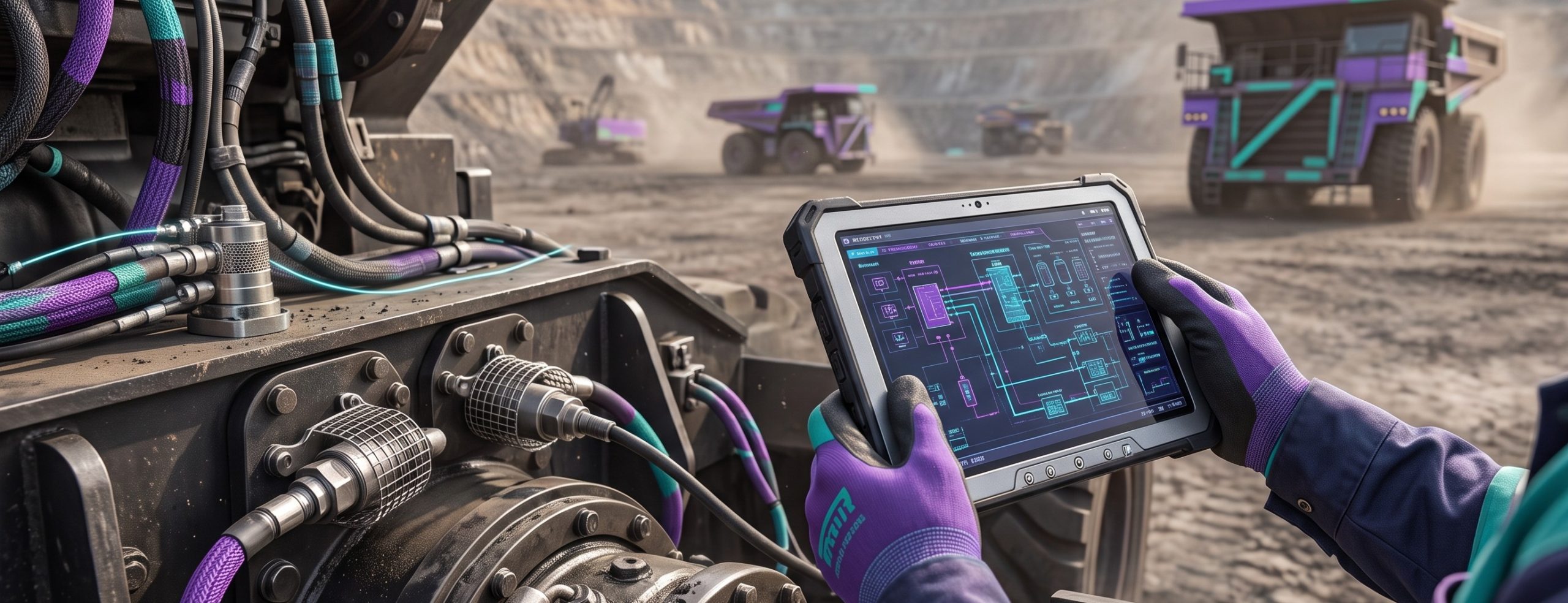
DataMind AI: DataMind AI connects to your existing sensors and OEM telemetry – across CAT, Komatsu, Hitachi, Liebherr, Sandvik, and other major OEMs – through a cybersecurity-safe connection, with no rip-and-replace required. Where additional sensors would meaningfully strengthen the sensor fusion picture, they’re added selectively, not as a default requirement.
Closing the Loop: Verifying the Fault Is Actually Gone, Not Just Signed Off
Detecting the fault early and recommending the fix is half the job. After the mechanic completes the work order, DataMind AI re-checks the equipment and verifies the original fault is actually gone – not just that the maintenance log shows “done.” A technician signing off on a repair isn’t the same as the fault being resolved. DataMind AI closes that gap, closing the full maintenance fault cycle instead of leaving it open on an assumption.
Frequently Asked Questions
Is predictive maintenance always cheaper than preventive maintenance?
Not automatically. Predictive maintenance only pays off when it’s catching faults early enough to avoid the failure – threshold-based predictive tools that fire late can cost more than a well-tuned preventive schedule, because you still absorb most of the downtime.
Why isn’t OEM telemetry enough to prevent equipment failure?
OEM telemetry is a valuable data source, but on its own it’s typically used to trigger alerts against fixed thresholds. By the time a threshold is crossed, a large part of the damage and deterioration has usually already occurred.
What is AI sensor fusion in mining maintenance?
AI sensor fusion correlates data from multiple monitored systems – vibration, temperature, load, cycle patterns – instead of watching a single value against a single limit, allowing developing faults to be recognized weeks before a threshold alert would fire.
How much earlier can sensor fusion detect a fault than a threshold alert?
It varies by failure mode and asset, but sensor fusion is typically able to surface developing faults weeks before a comparable threshold-based alert would trigger, giving maintenance teams time to plan repairs instead of reacting to a breakdown.
How much does unplanned downtime cost a mining operation?
It varies significantly by site, commodity, and equipment class, but unplanned downtime on a haul truck at a Tier 1 site commonly runs well into six figures per day in lost production.
Does DataMind AI require new sensors or hardware?
DataMind AI connects to your existing sensors and OEM telemetry first. Additional sensors are only added selectively, where they meaningfully strengthen the sensor fusion picture for a specific asset.
Which OEM equipment brands does DataMind AI support?
DataMind AI works across major OEMs including CAT, Komatsu, Hitachi, Liebherr, and Sandvik, among others, reading existing telemetry from mobile fleet and fixed assets.
How does closed-loop verification work after a repair is made?
Once a mechanic completes a work order, DataMind AI re-checks the equipment and verifies that the original fault is actually resolved – confirming the fix worked rather than relying on the maintenance log alone.
Let’s Talk About Your Site
Every site’s mix of preventive and predictive maintenance looks different – it depends on your fleet, your OEM mix, and which failures are actually costing you production. Let’s talk and see how our solution fits into your site set-up and fleet.