Engine Oil Cooler Leak Identified Through Persistent Contamination Analysis
September 2, 2026
DataMind AI continuously monitors engine oil contamination levels, coolant system integrity, and oil analysis trends on a CAT 793D haul truck. The system flagged persistent elevated sodium and copper levels in the engine oil, despite the customer performing multiple oil changes to resolve the contamination.
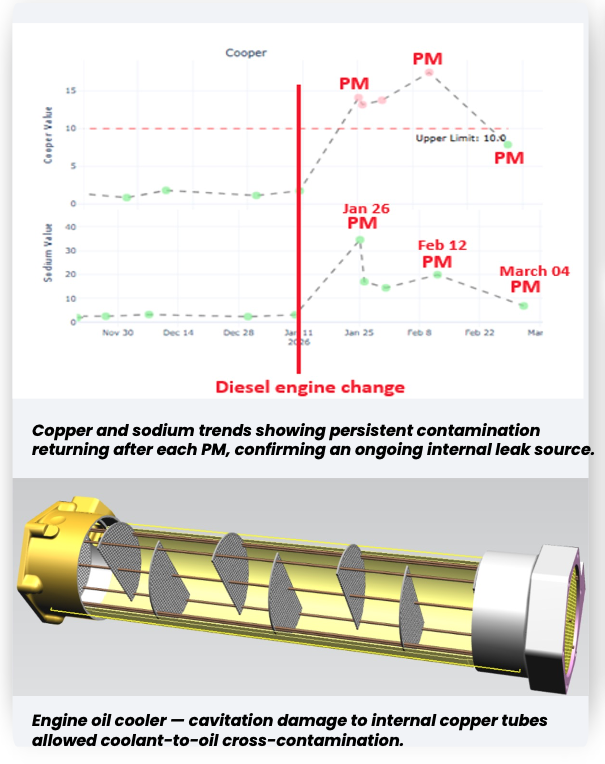
Oil analysis repeatedly showed sodium and copper contamination that returned after each oil change, indicating an ongoing internal source rather than a one-time event. Maintenance records confirmed several episodes of low coolant and low oil levels prior to the contamination. Conventional oil sampling alone would have prompted repeated oil changes without identifying the root cause, as the contamination persisted regardless of fresh oil.
Cross-referencing the oil contamination pattern with coolant level history, the AI identified the engine oil cooler as the most likely source. Low coolant levels allowed air ingress, causing cavitation damage to the oil cooler baffles. Hot spots developed in the cooler, damaging the internal copper tubes and allowing coolant (sodium) to mix with engine oil. Extended storage with damaged bonding agents on copper tubes was identified as a contributing factor.
Maintenance pressurized the oil cooler to 80 PSI minimum for 30 minutes and confirmed a pressure drop, leading to cooler replacement along with oil and filter changes. This prevented widespread engine damage from degraded oil lubricating properties, saving an estimated $45,000 and 48 hours of unplanned downtime.
Results at a Glance
$45,000
saved48 Hours of unplanned downtime prevented
Conclusion
Persistent sodium and copper contamination in engine oil despite repeated oil changes
Oil analysis trends correlated with coolant level history and oil cooler integrity testing
Degraded oil lubrication causing widespread engine component damage
Don’t let the next failure go undetected.
Explore 50+ real-world case studies showing how DataMind AI saves mining operations millions — or book a live demo to see it in action.
Fill in the form to download the case study
Don’t let the next failure go undetected.
Explore 50+ real-world case studies showing how DataMind AI saves mining operations millions — or book a live demo to see it in action.